
What is soft landscaping in North Perth?
“Landscaping” gets used as a catch-all term, and that causes confusion. Homeowners searching “what is soft landscaping” are usually trying to work out who to call for a specific job: paving, a retaining wall or new garden beds. Knowing the difference matters, because it determines who you call and what you can expect delivered to your outdoor space.
Soft landscaping vs hard landscaping: the key elements
Every property is built from two categories of work, and most confusion comes from the fact that a single project can involve both.
Hard landscaping elements: paving, walls and structure
Hard landscaping refers to the structural, built elements of a property: paving, retaining walls, decking, fencing and any other permanent structure. It is construction work, made from non-living materials such as concrete, timber and stone. On most hard landscaping projects, these structural elements get installed first, since everything living goes in around them.
Soft landscaping elements: plants, trees and garden beds
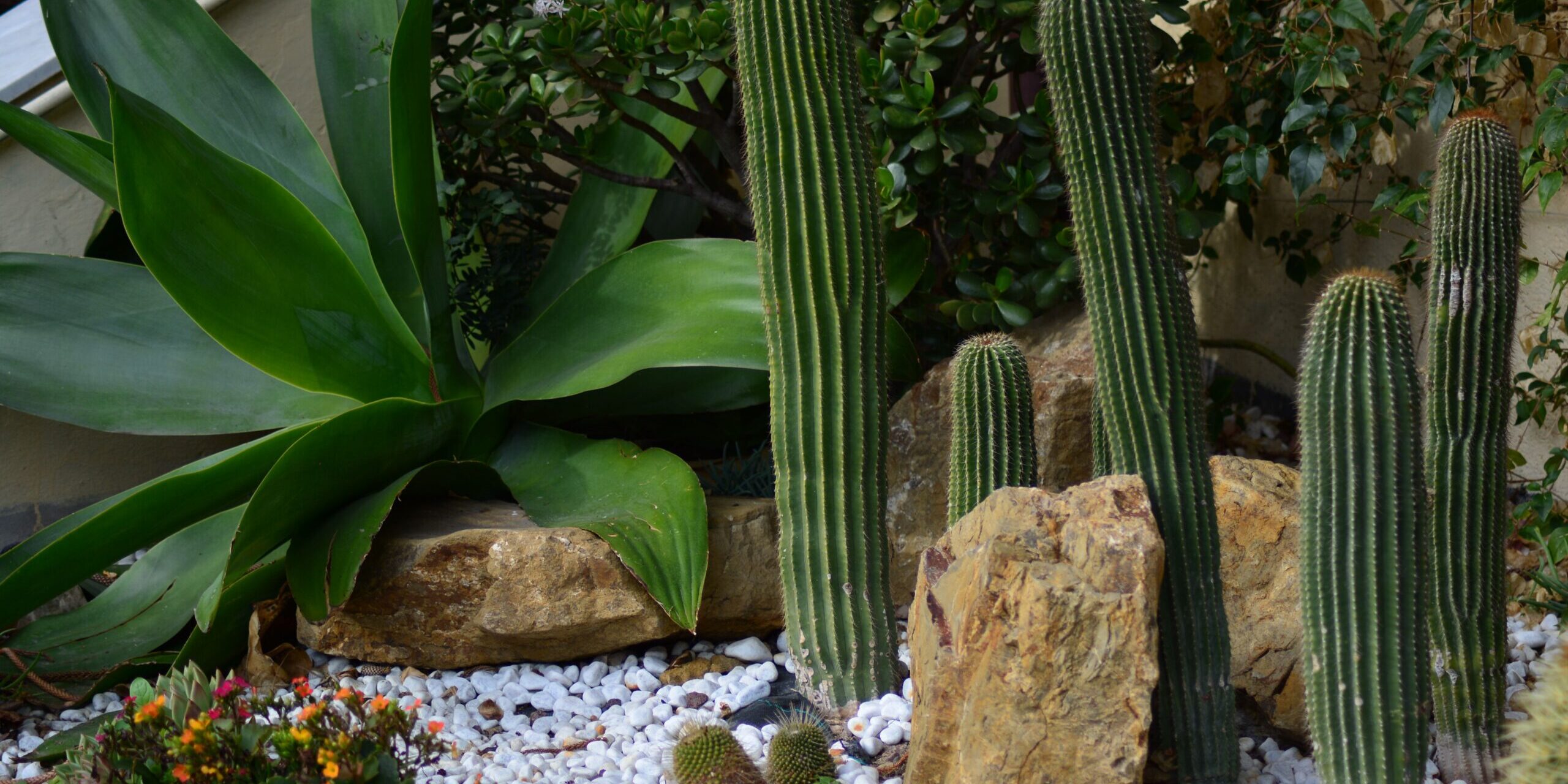
Soft landscaping focuses on everything living: plants, trees, shrubs, lawn and garden beds. It is horticultural work, and it is where soft landscaping vs hard landscaping stops being a definitional question and starts being a practical one about who you call.
Hard and soft landscaping working together
You will sometimes see these called hardscape and softscape elements, though on the ground it comes down to the same split: built versus living. A well-planned property needs both, but they are different trades with different skill sets. That is also why a quote that bundles hard and soft landscaping into one vague line item is worth questioning.
Soft landscaping meaning on Perth’s coastal corridor
The soft landscaping meaning shifts depending on where the property sits. On Perth’s northern coastal corridor, specific conditions apply that do not exist further inland: sandy soil, salt-laden wind and water restrictions all shape what actually survives. Get any one of them wrong, and the garden fights you from day one.
Here is what soft landscaping actually has to account for on a coastal block, and why it looks different in Alkimos or Eglinton than it does in Mindarie or Burns Beach.
Soil conditions and soil erosion
Soil preparation has a significant impact on everything that follows, which is why it comes first. Coastal soil in the northern suburbs is sandy, fast-draining and typically sits at a higher pH than soil further inland. That higher pH locks up certain nutrients before plants can access them, even when fertiliser is applied correctly. Sand also holds almost no nutrient reserve of its own, and on sloped or exposed sections of a block, it is prone to soil erosion once garden beds are disturbed.
This is why soil preparation comes before anything goes in the ground. We recommend removing at least 100mm of the existing soil and replacing it with a high-quality underlay, giving plants and turf a proper nutrient base from the outset rather than relying on fertiliser alone to compensate for what the sand cannot provide.
Grass selection for a low-maintenance lawn
Not every variety handles coastal conditions the same way. Warm-season grasses such as buffalo, kikuyu and couch suit Perth’s climate generally, but coastal blocks add salt exposure and wind to the equation on top of sandy, low-nutrient soil. The right variety depends on sun exposure, foot traffic and how exposed the block is to coastal wind, not just personal preference. Getting this match right at the outset is what actually delivers a low maintenance lawn. Get it wrong, and you are looking at years of a lawn that never quite establishes, however often it is mowed under a garden maintenance schedule.
Reticulation, water restrictions and water runoff
Coastal properties put more pressure on a retic system than inland blocks. Wind disrupts spray patterns, sandy soil lets a full watering cycle run straight through as water runoff before plants can absorb it, and Perth’s water restrictions mean every scheduled watering day has to count. Three things matter most here:
- Head-to-head coverage: every part of the garden needs to be reached by at least two sprinkler heads, so coverage holds even when wind pushes spray off course
- Windy conditions: exposed coastal blocks need irrigation programmed around wind patterns, not just a standard inland schedule
- Water restrictions: scheduling has to work within Perth’s allocated watering days, which means correct coverage and timing matter more than simply running the system longer
A retic system that does not account for these three things will leave dry patches no matter how often it runs, and diagnosing one after the fact is time-consuming. Our reticulation service covers design, installation and seasonal adjustment for exactly this reason.
Plant selection: aesthetic appeal meets salt and wind tolerance
Coastal exposure is the deciding factor in what survives on these blocks. Salt-laden wind off the coast burns foliage that is not suited to it, and long, hot summers add heat and water stress on top. Plant selection for a coastal property has to prioritise salt tolerance and wind tolerance first, with aesthetic appeal and seasonal interest fitted around those constraints rather than the other way around. A plant that performs well in a sheltered, inland garden can struggle badly within a few hundred metres of the coast, and replacing salt-burned plants twice a year costs more over time than getting the selection right once.
Beyond visual appeal, established plantings do real functional work. Trees and shrubs provide shade in summer, soften noise pollution from busier roads and improve air quality by absorbing carbon dioxide. There is also a simpler case for it: a garden that holds up on its own is genuinely nicer to spend time in, and a well-kept outdoor space has a way of taking the mental load off a homeowner that a stack of hard surfaces never will.
Garden beds, flower beds and outdoor rooms
Garden design on a coastal block is not just about what survives. Positioning garden beds and flower beds around a property’s natural features creates distinct areas and adds depth to a garden that would otherwise read as one flat green space. A raised flower bed near an entry, or a planting bed that screens a fence line, does more to turn a yard into a set of outdoor rooms than any single plant choice.
This is also where kerb appeal and property value intersect. A property that presents well from the street, with garden beds that look intentional rather than incidental, holds its value and rents faster if it is an investment property in the northern suburbs.
Mulch and ongoing maintenance
Mulch is not an afterthought on sandy coastal soil. It plays a crucial role in a coastal garden’s survival: it retains moisture that would otherwise evaporate within hours on exposed sand, moderates soil temperature through summer heat and helps prevent soil erosion on beds that are still establishing. A layer of organic materials, or other organic materials such as composted mulch, also reduces how hard the retic system has to work to keep plants established.
On a coastal block, a well-mulched garden bed is doing real work, not just finishing the look. It is also one of the simplest ways to keep ongoing maintenance manageable once the initial planting is done.
Landscape design, garden design and where soft landscaping fits
Landscape design and landscape architecture decide the ideas: what goes where, how the spaces connect, what the finished garden should feel like. Soft landscaping is the execution stage. It is where those ideas either establish properly or fight the coast from day one.
Our soft landscaping service covers plant, tree and shrub installation, built around what coastal conditions actually demand: properly prepared soil, the right grass and plant selection for salt and wind exposure, a retic system with genuine head-to-head coverage and mulch that protects the investment underneath it. Whether you are designing outdoor spaces from an existing plan or working from a clear brief on what the space needs to do, we treat the soil, grass and plant selection as the crucial role they are, not a formality on the way to the planting.
We do not offer hard landscaping or landscape design. What we do is soft landscaping implementation: getting it right the first time, so the garden establishes properly instead of fighting the coast every step of the way.
Frequently asked questions
What’s the difference between hard and soft landscaping?
Hard landscaping is the built, structural side of a property: paving, retaining walls, decking and fencing. Soft landscaping is everything living: plants, trees, lawn and garden beds. Most properties need both, but they are separate trades.
How does softscape differ from hardscape?
Softscape and hardscape are just the informal names for the same split. Softscape covers the living elements of a garden, plants, lawn and trees, while hardscape covers the built elements, paving, walls and decking. The terminology changes; the distinction does not.
Do I need landscape architecture or just soft landscaping?
That depends on where you are starting from. If you already have a plan and know what you want the space to look like, soft landscaping installation is what turns that plan into a garden. If you need the space designed from scratch, that is landscape architecture or garden design territory, which sits outside what we offer.
How long does a soft landscaping project take?
It depends on block size and scope. A straightforward planting job on a smaller Alkimos or Eglinton block moves faster than a full soil replacement, retic upgrade and planting scheme on a larger Mindarie or Burns Beach property. We will give you a realistic timeframe once we have walked the property.
What areas do you service for soft landscaping?
We service Perth’s northern suburbs, including Alkimos, Eglinton, Mindarie, Burns Beach, Clarkson and the surrounding coastal corridor. If you are unsure whether your block is covered, get in touch and we will let you know.
If your garden needs new life put into it, get in touch and we will talk through what the space needs.